

Neutralizing Fat
With author and debut memoirist Lu Chekowsky.

Hello lovely readers! How is everyone doing today? At the risk of fangirling out, I am thrilled that today’s word essay will be accompanied by an author Q&A with Lu Chekowsky, whose memoir, Don’t Buy What I’m Selling: On Breaking Up with Advertising and Finally Learning to Love My Whole, Fat Self, I absolutely devoured. As she writes in their TikTok bio, Chekowsky is “an ex-ad exec turned ad critic who takes on fatness/grief/capitalism/beauty standards/our robot overlords.” It was a delight to speak with Chekowsky and examine the word fat together. As always, thanks for being here!
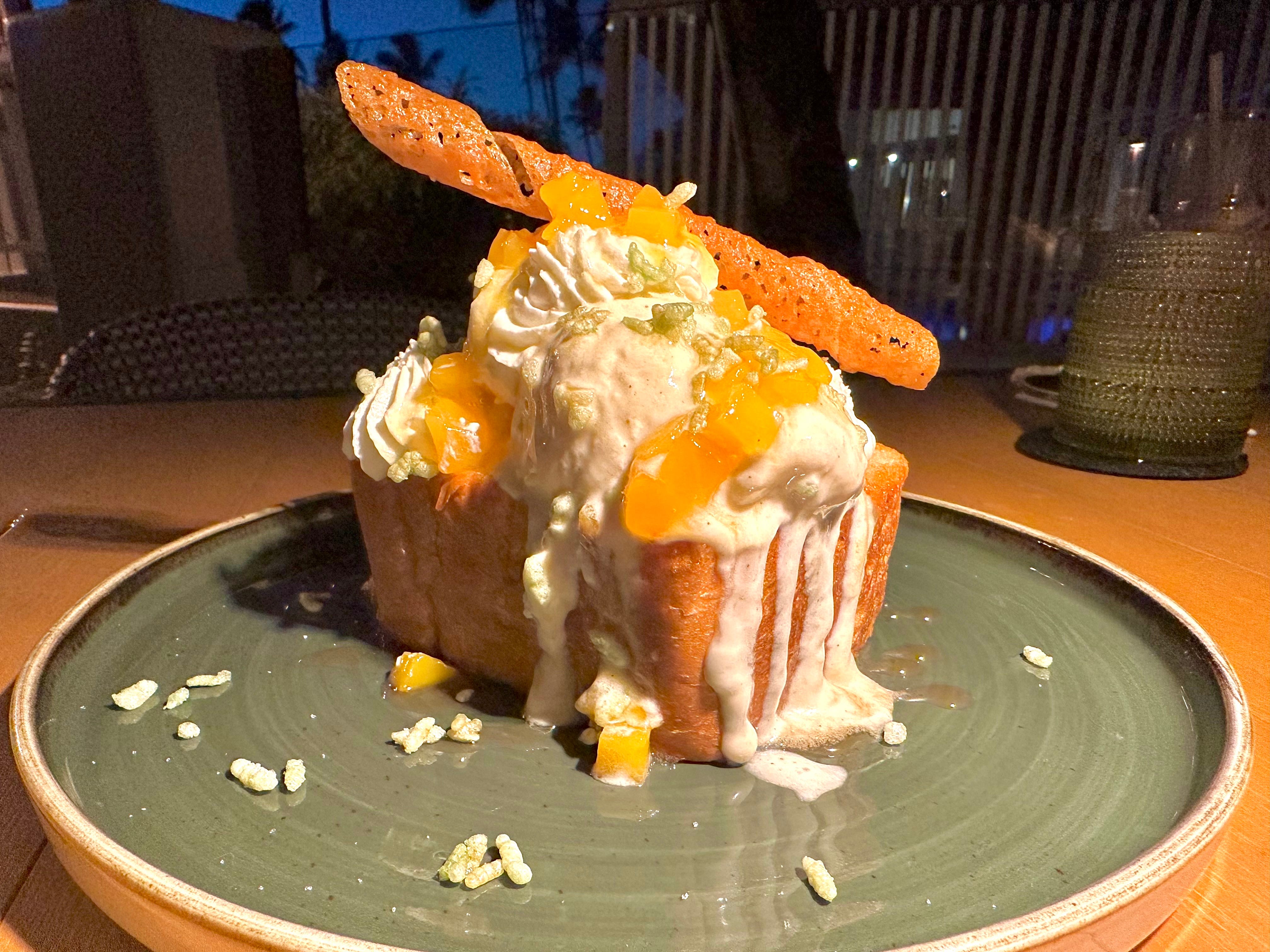
FAT: notable for having an unusual amount of fat. Having excess body fat. Well filled out. Full in tone and quality. Being substantial and impressive. Richly rewarding or profitable. (Source: Merriam-Webster)
The first two entries in the above definition suggests that fat has the potential to be a neutral descriptor. But who decides what an “unusual amount of fat” looks like? Why is fat a word that is charged with morality, one that is used to taunt, weaponize, degrade? It wasn’t until I had a shameful doctor’s appointment experience three years ago—when I inquired about my weight gain and was told that my weight put me in the obesity category, that losing even ten pounds would help, that, for what it’s worth, I didn’t look obese—that I became hyper aware of fatness and how negatively it’s perceived.
I also realized that I had internalized fat phobia on some levels—even as someone who has an open mind and accepts people from all walks of life, with different skin color, and in different bodies—and then I began to see it everywhere. The way that in TV shows and movies the fat friend is the comic relief, never the star—or, if they do attain lead role status, it’s only after they transform their body to be smaller. How fat is used as a punch line or a cautionary tale. How many ads there are for products that will make us slimmer, happier, more beautiful—with the underlying message that attaining these attributes means that we will be less fat.
I have been paying more attention to the word fat especially because my daughter is ten years old and I can see the insidious ways that diet culture and fat phobia is creeping in. It feels important for me to make peace with my body and stop obsessing about what is healthy, to quell the food noise that plagues people, especially women, which sometimes feels like it is amplified to ear-splitting levels because I write about food. I want her to know that health comes in all sizes. That it’s okay to take up space with your body, to eat foods that bring you pleasure, to move your body in a way that brings you joy. That shrinking yourself, or restricting what you eat, or exercising to earn your calories based on some outward ideal is not a way to live authentically. I want her to, as I am learning to do, trust her gut to tell her when she is full and to guide her to a fullness in life, too.
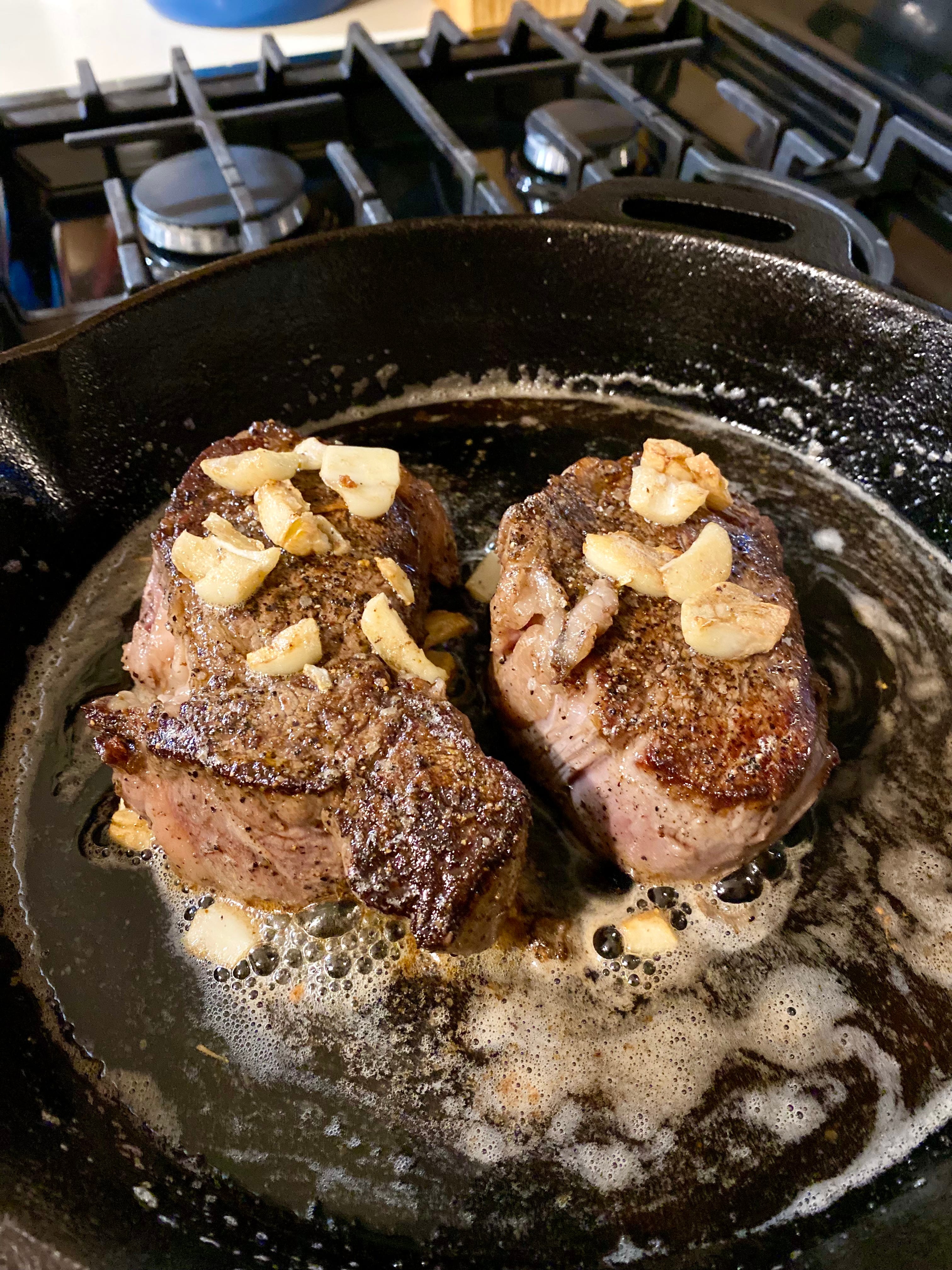
Besides maybe the dictionary entry about being well filled out, I’m sure that the other definitions listed above weren’t intended to apply to bodies: Full in tone and quality. Being substantial and impressive. Richly rewarding or profitable. As a gourmande and home cook, I know that fat is flavor. As a food writer and restaurant obsessive, fat brings richness to dishes and evokes the kind of pleasure that makes my prose swell and my heart sigh. And in advertising, fat’s richness (and profitability) is rewarded with ample air time.
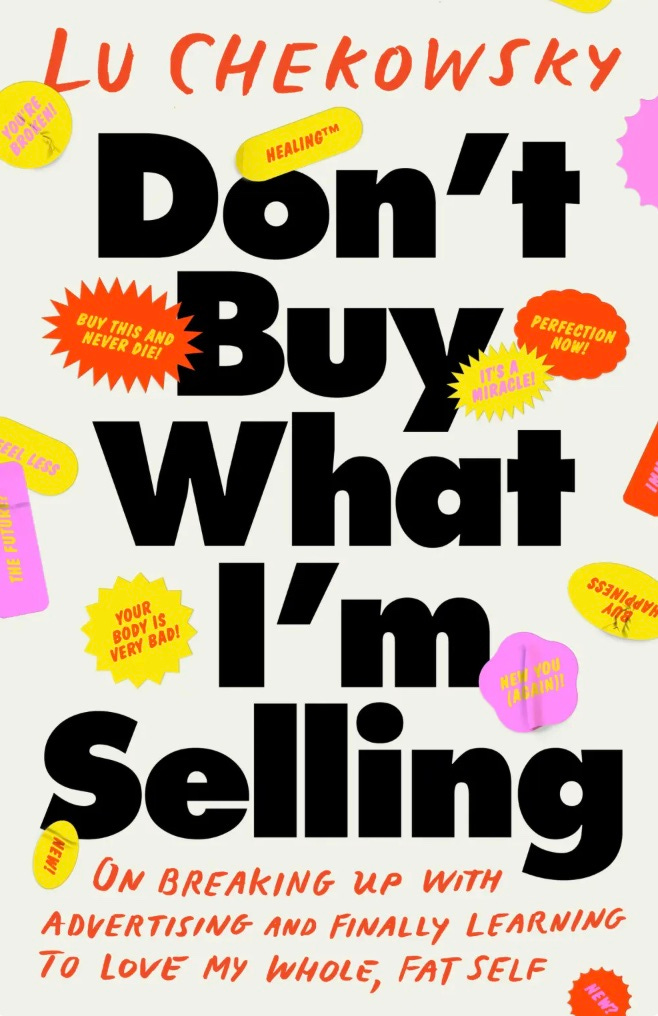
As Lu Chekowsky writes in their debut memoir Don’t Buy What I’m Selling: On Breaking Up with Advertising and Finally Learning to Love My Whole, Fat Self, “In food ads, fat is foreplay. Taco Bell nachos can inspire tongue-wagging lust. Whole-cream ice cream can be licked with a wet, wanton tongue. Who doesn’t want to slurp a succulent sauce right off a plate?” But, as she writes next, if you put the fat on a person, it’s a problem. “On bodies, fat is fear. Repulsive. Unattractive. The worst thing a person can be.”
As a woman navigating body image and acceptance, I love the idea of applying some of the positive attributes of the word fat to taking up space with my body. Of having it be regarded as substantial, impressive. Part of the work I’ve done to accept my body is to celebrate all that it can do for me, and not what it cannot. To appreciate where it’s gotten me and where it will take me. I think finding home in my body is a journey without a final destination, but one that I hope to appreciate with its twists and turns, folds and curves.
My interest in people’s relationships to food and eating and bodies is perhaps partly why I was so taken with Chekowsky’s memoir. But I also couldn’t put the book down because it is expertly crafted with a voice that shines with vulnerability, wit, humor, and rawness. And because it offers a fascinating and critical behind-the-scenes look at advertising, where Chekowsky wrote the words Michael Jordan spoke in one of his most iconic Nike ads and orchestrated promo shoots with pop stars like Justin Bieber (one of many truly laugh-out-loud scenes in the book) and MTV celebrities.
But even as she was succeeding professionally, selling the kind of unattainable beauty and bodies of the elite athletes and celebrities she worked with and the adjacent products advertised during commercial breaks, she was at war with their body. After 14-hour days she ordered takeout to gorge on alone at home and often binge ate in the night without any recollection until she woke up with crumbs in the sheets and bile in their throat. Chekowsky’s book and story of their body is also a personal account of grief, of losing their mother to cancer and the toll that carrying such a load takes on our bodies and hearts.
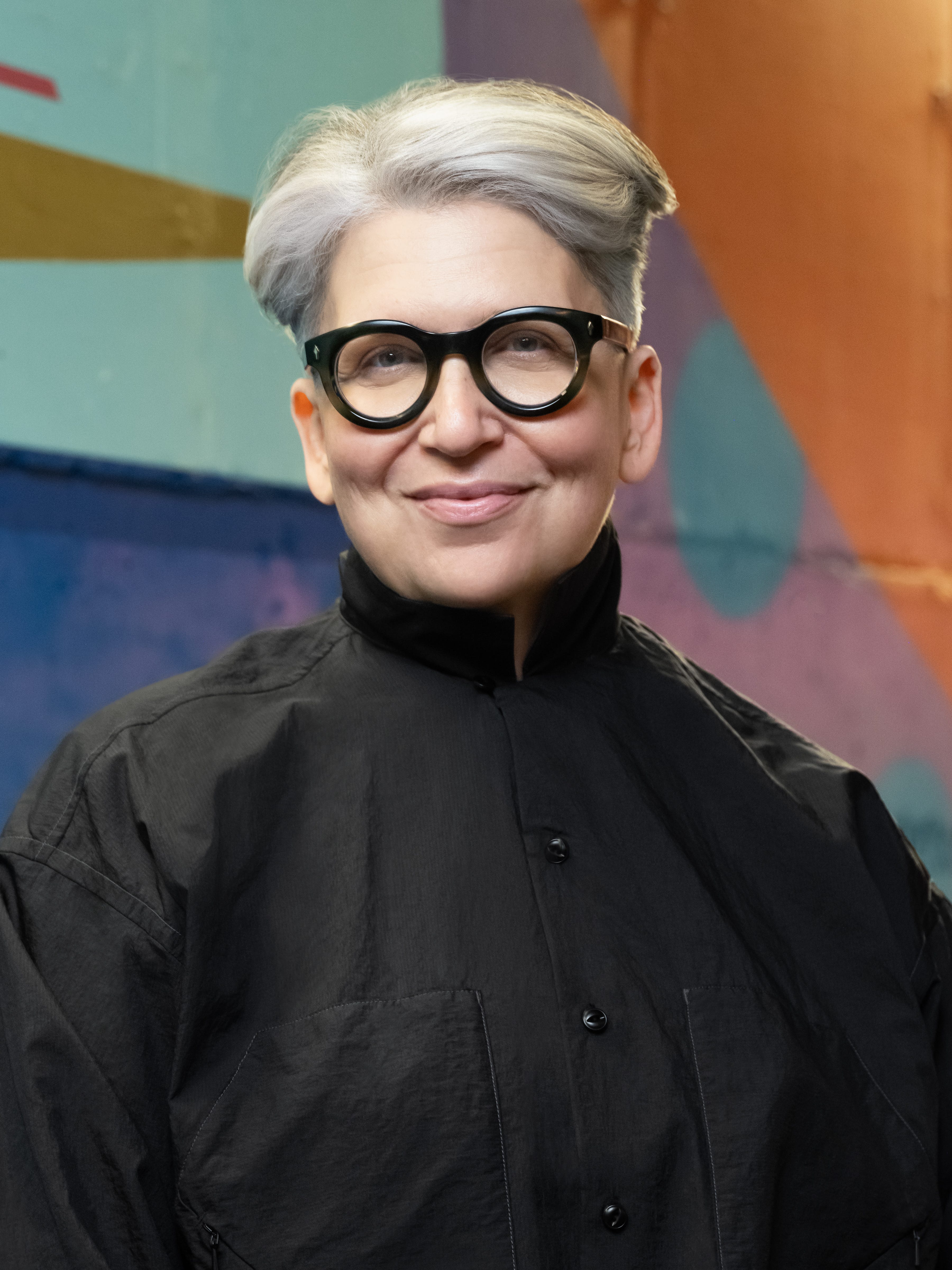
After I sent Chekowsky a gushing DM on Instagram, she graciously made time to explore the word fat with me. The fact that ‘fat’ is on the cover—the subtitle is “On Breaking Up With Advertising and Finally Learning to Love My Whole, Fat Self”—made me want to learn more about how she’s found a way to feel more embodied. I wanted to know how she defines ‘fat’ and how that definition has evolved, and to examine why it’s still such a charged word for so many people. She also offered one of the best pieces of writing advice I’ve heard and gave a stellar book recommendation. I loved our conversation and hope you do too; it has been edited for clarity and length.
How do you define fat?
I say this in the book: It’s like a funhouse mirror. Whatever you’re bringing to that word, it illuminates in your mind a series of stories and associations that can be different person to person. I literally use that word to define the factual state of my body which is holding on to this tissue. Once I decided that it was a statement of fact and I tried to diffuse it like a bomb, I was able to have a far deeper relationship to it. Because I could look at it and hold it and not worry about it blowing up in my face. Once I took out the charge from it, it became a factual descriptor of size, of presence.
Do you think you were able to do this partly because, as you write in the book, that if you got rid of fat in your vocabulary it would mean not being able to talk about or celebrate your beautiful mother?
Yes. I think the book is partly an attempt to humanize fat people. And in the exercise of writing the book my relationship to my fatness evolved. Which is why I would tell any writer or author to write about the thing that torments them the most. Because there is a neutralization process that can happen when you look at the pages and reuse the word.
But I also think my health issues was where it became really clear that fatness alone was not a death sentence, it wasn’t a crime. There were these other things that could potentially end my life. And the fatness became ‘Is this the thing I want to consume me, or do I want to live?’ There were so many things calling for my attention in terms of my health that it was just on a checklist. It was not the only thing, even though for years it felt like it was.
That makes sense. Among fat activists there seems to be a sort of reclaiming of the word fat. Do you think that’s fitting?
For me, reclaiming has too much energy behind it. Reclaiming still has an aggression or response or reflex. I want to be absolutely unmoved by the word, in my use of it. At this point, my relationship to it is such that I can say, ‘I’m Lu, I’m fat, nice to meet you’ and I can feel nothing about it.
Now cut to me 20 years ago where all I was trying to do is pretend that I had no arms or I had no legs or I had no body. I write at length about the torturous pain of that so I have great empathy for people who are not at that point and the road it takes to get there in our culture that demands we have a response to the word. It’s a process and it’s a challenging one. I see the word as lightness and as power, not in a ‘take it back way,’ but—it’s a big word and it describes a big feeling and a big way to be and I find that joyful and kind of fun.
What a beautiful place to be. One of my favorite lines in the book is “I wish I were more like the Kool-Aid Man—fat, confident, pantless, and taking up space without doubting myself.” For me that kind of embodies how I’d like to feel about my body. Do you think you embody this spirit more these days?
Yes and no. I do feel more at home in my body and that’s from a lot of care and forming a new relationship with it as a result of a variety of issues that I’ve written about. Cut to me thinking about a second book about the years between getting sick and talking to you now. Because a lot of things have happened to get me to this point. And it’s not really fair to assert that it was a magical moment where from one day I was this way and another day I was another way.
That being said I have felt there is a desire externally to have me be a ‘before and after’ story. I was very haunted by the idea. And so when people project an after onto me, I don’t feel like the Kool-Aid Man because I feel like it can send me back in time. And I just want to cover myself back up. So I guess the Kool-Aid Man is a bold, bursting-through-walls figure, and to me, my comfortability in my body doesn’t manifest as an explosion through a wall but as more of a quiet, private feeling.
That image just really stayed with me—the whole notion of taking up space without doubting yourself. So much of my story has been to feel more at home in my body and to not be afraid to take up space with both my voice and my body.
Fat means taking up space negatively; it’s just intrinsically baked into the word. But meanwhile people who are taking up space confidently are revered and held up; but when you talk about taking up space physically with fatness it takes a turn. Fat is a lens. That’s really where I landed at the end of my book; I had to look at every facet of my story through that lens because it was always present and informing everything I did from my career to my personal life, to my family life and my health, on and on.
I like that you alluded to your second book. I feel that you have reclaimed your voice in a different way, to serve yourself. What do you want to write next?
I have an idea that is fiction, I have an idea that is more autofiction, some truthiness but some new worlds. I have an idea for a continuation for this memoir for where it chronologically left off. I’m playing with a lot of things at the moment and I’m not really sure yet where I land. But it’s exciting to think about.
What’s the last book you read that you couldn’t put down or that you are currently obsessed with?
This is my second time reading We Play Ourselves and I believe that it has secrets for my next project inside of it. It’s a novel by an author and playwright named Jen Silverman. It came out in 2021 and it’s about a young playwright in New York who has a public meltdown and is reinventing herself. You want to talk about voice? It’s voice for days, it’s character for days, it’s so fun and so propulsive—I love it.
For more of Chekowsky’s work and insights, read Don’t Buy What I’m Selling: On Breaking Up with Advertising and Finally Learning to Love My Whole, Fat Self, follow along on Instagram and TikTok, or check out their Substack newsletter ‘Don’t Buy What I’m Selling.’
I love this issue so much! Lots to be think about and be moved by here. Thank you for sharing!